Only cleaner transport, more efficient energy production and improved waste management can move the world’s poorest cities to reduce their air pollution – currently up to 10 times higher than levels approved by the World Health Organization, the world’s top health agency said in a new report released today.
More than 80 percent of the people living in urban areas that monitor air pollution are exposed to air quality levels that exceed the World Health Organization (WHO) limits, the UN’s health agency said in a new report today.
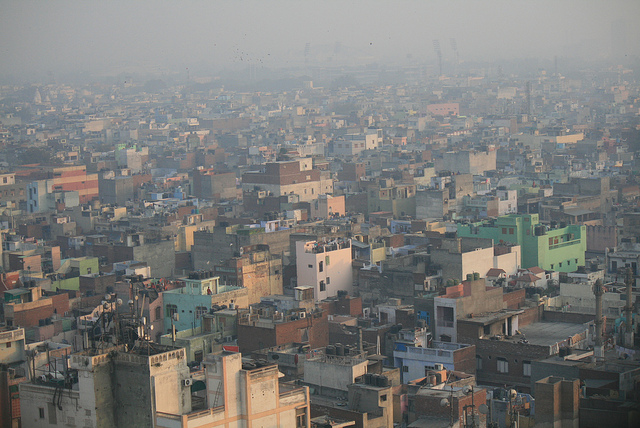
All regions of the world are affected, but populations in low-income cities suffer the worst effects.
Some 98 percent of cities in low- and middle income countries with more than 100,000 inhabitants do not meet WHO air quality guidelines.
In high-income countries, that percentage decreases to 56 percent.
The WHO urban air quality database covers 3,000 human settlements in 103 countries ranging in size from a few 100 to more than nine million inhabitants. Most of the data comes from cities with populations of 50, 000 inhabitants or more. Roughly 25 percent of the data comes from smaller urban areas of up to 20,000 residents.
In the past two years, the database has nearly doubled, with more cities measuring air pollution levels and recognizing the associated health impacts.
Ambient air pollution, made of high concentrations of small and fine particulate matter, is the greatest environmental risk to health, causing more than three million premature deaths worldwide every year.
As urban air quality grows worse, the risk of stroke, heart disease, lung cancer, and chronic and acute respiratory diseases, including asthma, increases for the people who live in these cities.
WHO compared a total of 795 cities in 67 countries for levels of small and fine particulate matter (PM10 and PM2.5) during the five-year period, 2008-2013.
PM10 and PM2.5 include pollutants such as sulfate, nitrates and black carbon, which penetrate deep into the lungs and into the cardiovascular system, posing the greatest risks to human health.
Most sources of urban outdoor air pollution are beyond the control of individuals and demand action by cities, as well as national and international policymakers to promote cleaner transport, more efficient energy production and waste management.
But it is possible for cities to clear the air. More than half of the monitored cities in high-income countries and more than one-third in low- and middle-income countries reduced their air pollution levels by more than five percent in five years.
Reducing industrial smokestack emissions, increasing use of renewable power sources, like solar and wind, and prioritizing rapid transit, walking and cycling networks in cities are among the suite of available and affordable strategies.
“It is crucial for city and national governments to make urban air quality a health and development priority,” says WHO’s Dr. Carlos Dora. “When air quality improves, health costs from air pollution-related diseases shrink, worker productivity expands and life expectancy grows. Reducing air pollution also brings an added climate bonus, which can become a part of countries’ commitments to the climate treaty.”
During the World Health Assembly, May 24-30, Member States will discuss how to counter the adverse health effects of air pollution.
心得:現在的社會和經濟如此發達,工業革命造就了現在的世界,但是工業總是會排放廢氣,而廢氣中的懸浮微粒會造成空氣汙染,在文章中提到,一但廢氣問題日漸嚴重,會造成心血管疾病及呼吸道疾病,會危害人體健康,雖然空氣汙染並非個人所能控制,但是如果政府以及大眾能夠制定一套緩解的措施,也許一時沒辦法解決,但是至少能夠讓空汙的情形不再那麼嚴重,一但空氣品質變好,會使得國家生產力提高,讓壽命增長